

Calvin Dimas
Dichotomy. A word that means a division or contrast between two things that are, or are represented as, being opposed or entirely different.
That is the word I would pick to best describe Resident Evil: Requiem, the 9th entry in the long-running survival horror franchise. Requiem, like past Resident Evil games, stars two playable characters. Grace Ashcroft, who makes her debut, and Leon S. Kennedy, a longtime series veteran.
This is definitely the best-looking Resident Evil game. From the opening in Wrenwood, a new location that looks straight out of Chicago, we see bright neon lights glowing against the grey of a rainy day. The lights reflect in the puddles, and it’s very evident that Capcom wanted to make a good first impression right out of the gate with Requiem. The graphical fidelity never wanes and makes the more gruesome sections feel much more visceral due to the amount of graphical optimization. Hair is easily the standout winner of what looks the best, but if you have the option to increase the graphical output in any way, I absolutely recommend doing so to get the most out of the gorgeous game.
Disclaimer: This review was written before the Leon Must Die Forever DLC was released and was not included in our critique.
Rookie vs Professional
Players will begin the game as Grace Ashcroft, an FBI agent who has no experience battling bioweapons. You’ll find yourself spending the opening hours crouching in the darkness as you hear sounds of the gruesome monsters around you, hoping no one will notice you as you attempt to sneak by.
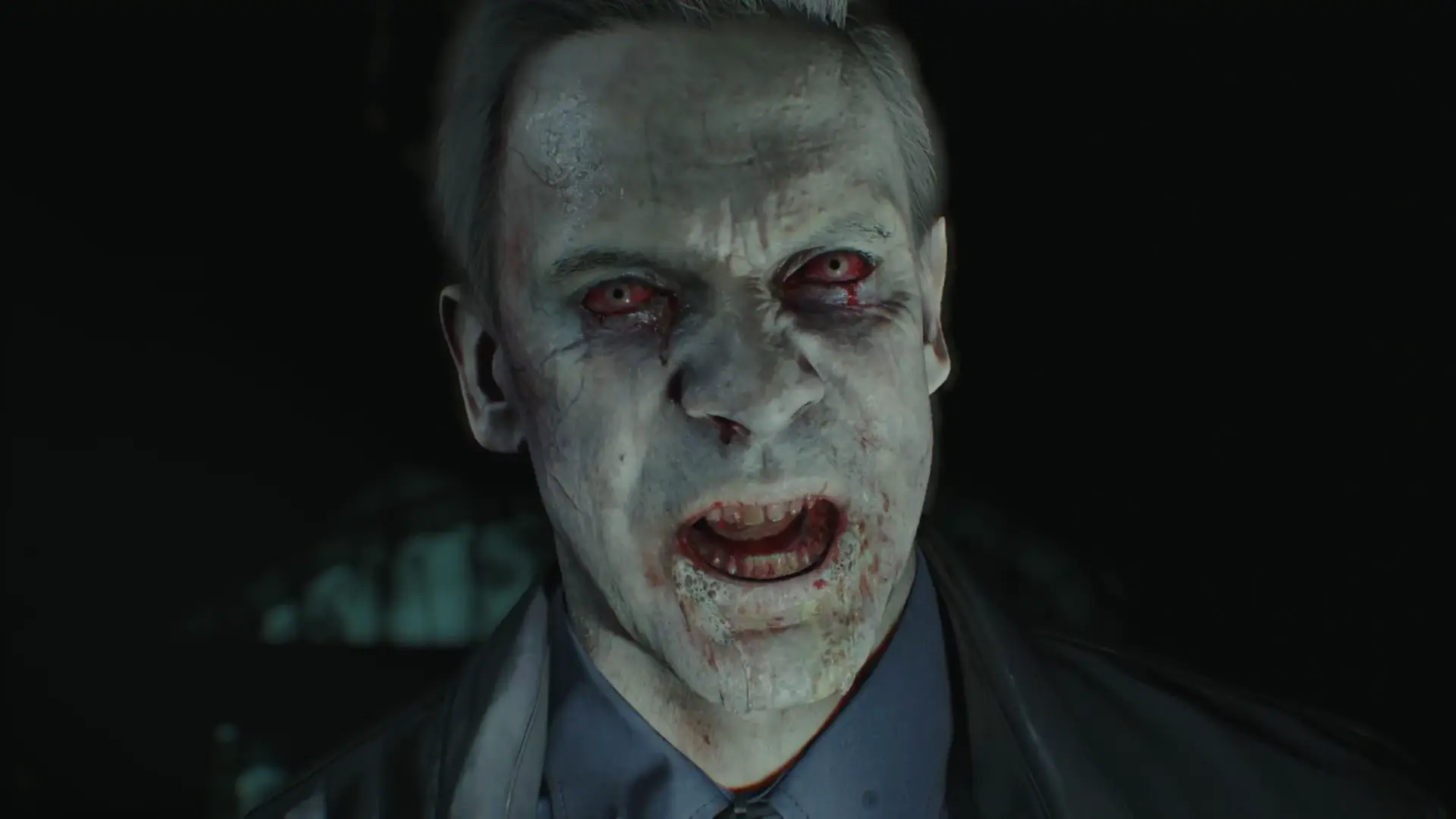
When you play as Grace, you’ll move at a slower pace, and as a result, you’ll get more acquainted with your environment. While not required, it can be helpful to keep track of where zombies are likely to be and learn their routines. In Resident Evil Requiem, the zombies are much more intelligent and have personalities that make them stand out a lot more than in previous entries. There are zombies that flip light switches off after you flip them on for better visibility, a chef who continues to prepare meals despite himself and the rest of the staff being undead monsters, and zombies that sing haunting yet beautiful melodies that can be used as a weapon against you. It ironically makes the zombies feel much more alive than in past games. If you’re a fan of lore and reading notes, you’ll eventually find out why these zombies feel more humanlike than those in the previous games. While the enemies you encounter early on are very much “monsters,” they still come across as humans, acting in a way that is beyond their control.
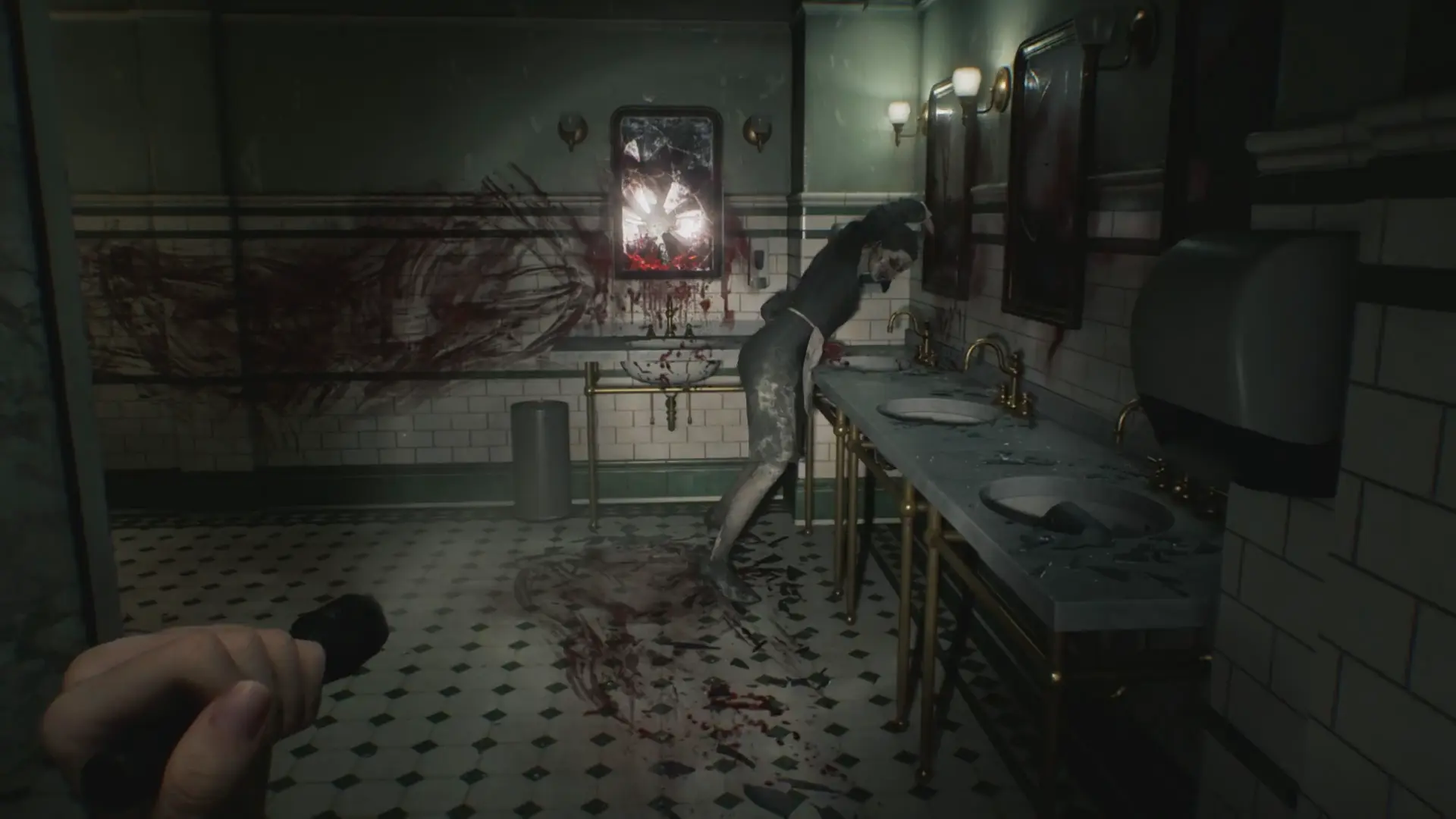
Combat with Grace often feels like a puzzle early on due to the survival horror staple of a limited inventory. While this is to be expected, the puzzle aspect of combat is taken a bit further by severely limiting your ammo and giving Grace one bullet to work with, meaning you must select your only target wisely. Even when you do get your hands on more ammo, many areas of the game continue to feel like a puzzle and ask you to pay attention to your surroundings. A zombie might lurch towards Grace, readying itself to take a quick bite, but it can be diverted by interactive elements in the environment that will steal away the zombie’s attention. An example of this, is when fragile items are broken, the few zombies who are sensitive to sound will hear this and will be sent into a frenzy, attacking anyone near them. Not every encounter must occur head-on. Grace’s sections are more in line with the classic Resident Evil formula, with a few new twists like the ability to stealth kill enemies.


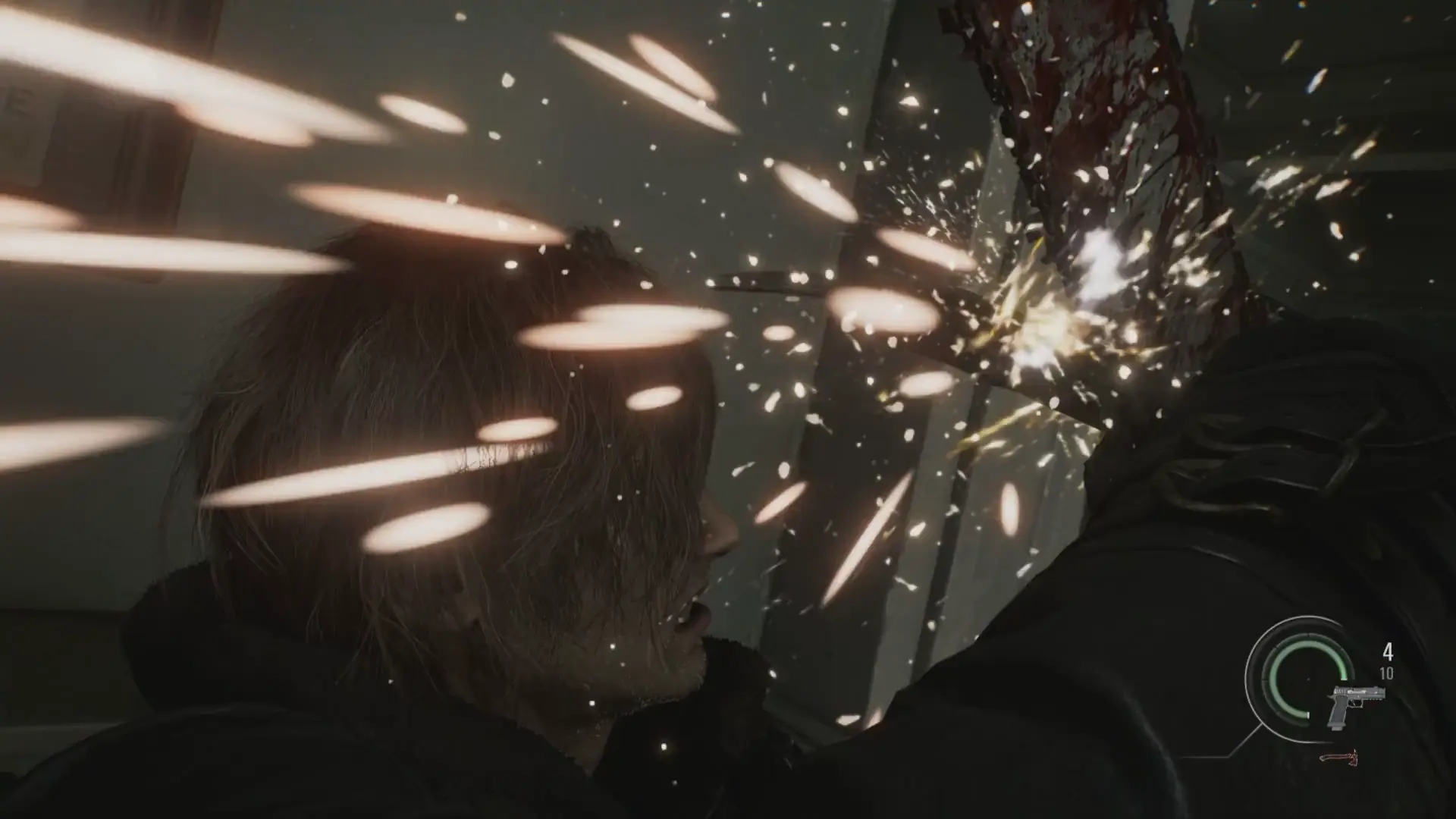
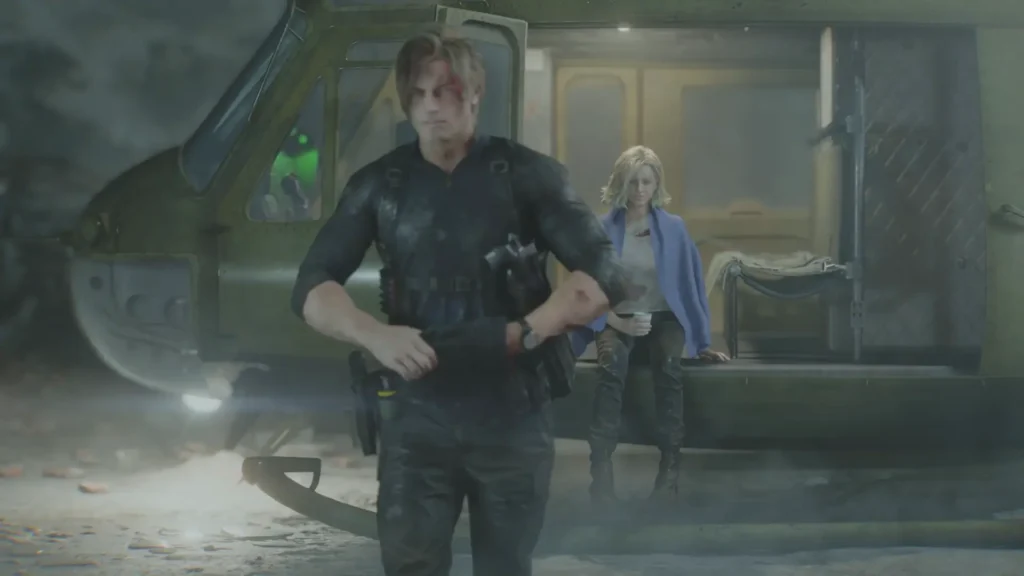
In contrast, you’ll spend the other half of the game as zombie-slaying veteran Leon S. Kennedy, who returns after his last appearance in Resident Evil 6 in 2012. Leon did appear in the Resident Evil 2 and Resident Evil 4 remakes that were released in 2019 and 2023, but it has been over a decade since we have seen Leon aged up in a video game. Leon’s gameplay is much more action-focused. A combat scenario might play out like this with Leon: you see a broken pipe near you as a horde of decaying people shamble towards you. You quickly grab it and launch it towards an enemy as it pierces their head. Seconds later, you fire off a few shotgun blasts as you thin out the horde, but before you can reload, another infected enemy lunges at you, but due to their decay, they’re too slow. You’ve already parried their attack away, leaving them open for a gruesome counterattack. Leon’s gameplay is much faster, more explosive, and leaves you wanting more as you’ll speed through earlier segments when compared to Grace’s slower and more methodical gameplay.
Halfway through the game, Requiem will invert itself and make Leon the focus, with the Grace sections being much shorter. It is during this time that Requiem transforms into a completely different game. Instead of hallways, locked doors, and puzzles, you’ll roam the streets of Raccoon City in an open zone that falls in line with the more modern Resident Evil games.
Even though most of your fights will be against zombies and bioweapons, you will eventually encounter a rare enemy type: humans. When you think of Resident Evil enemies, uninfected humans are usually not at the top of the list, and it shows when you come across them in Requiem. During these few encounters, it felt like a casual shooter player jumping into a competitive lobby. It makes sense that a fully alive person is going to respond in a much more challenging way than the undead will, but it is jarring to have combat ramp up in difficulty out of nowhere. In a game that often showcases how well-divided gameplay can work, its an area of Resident Evil: Requiem that did not feel good and took the game down a peg when the rest of the combat was nowhere near as frustrating.
Perspectives of the Past
Another divide that makes Grace and Leon’s segments feel like they are in contrast, is the option to switch between first and third-person views when playing. First-person is recommended for Grace’s playthrough and allows a player to get more immersed in the horrors that the game can offer. The third-person view is recommended for Leon and links back to the series’ roots, as it is this camera perspective that helped establish the iconic identities of the Raccoon City survivors of past Resident Evil games. While these perspectives are recommended, they are not required and can be swapped at any time.
To be honest, being able to swap between first and third person views from a menu is a welcome change in the series, and it’s also an area of the game where it was clear that a lot of time and care went into designing how Leon and Grace interact with the horrors in front of them. Even though players are told that Grace’s sections should be played through in first-person, there is a ton of love the developers put into her animations, but you can only see these if you play in third person. When you fire stronger guns, Grace will get pushed back a little bit due to the kickback and will shake out her hands to relieve some of the power of the gunshot. In first-person, you’ll just see her shake hands, while in third-person, you’re able to take in and appreciate the full character moment being demonstrated on screen. Another big difference is when Grace is running from enemies. In third person, Grace will topple over herself as she attempts to make an escape from monsters and the undead. Watching her fall definitely creates a sense of urgency as you want Grace to get back up as quickly as possible, so you do not get caught and killed by a potentially avoidable encounter. It’s an animation that makes perfect sense for Grace as a character, as she’s terrified and trying to survive, but it can also be easily missed if a player goes with the default setting and never returns for additional playthroughs.
On the other hand, seeing Leon parry a zombie attack and counter by smashing his boot into its head definitely makes more sense to see in a third-person perspective versus a first-person one. While the animation can be just as visceral in first person, a third-person view allows the player to take in the full choreography of the execution.

An Undead Legacy
This is what it is like to play Resident Evil Requiem. The two play styles of Grace and Leon combine the series history while improving on the legacy that Capcom has built up over the past two and a half decades. This is not the first time we have seen a traditional survival horror playstyle mirrored against a more action-focused one. Capcom had previously teased dual playstyles in both Resident Evil 7 Biohazard and Resident Evil Village.
Requiem feels very much like Capcom took not only what has worked in past Resident Evil games but also additional gameplay elements from more recent Capcom titles. Leon’s segments are definitely the most fun to pick up and play, and his new axe that allows for melee combat and parrying just about any attack, feels very Devil May Cry inspired, especially when he uses this axe to execute zombies in a flashy and satisfying way. The axe, however, has limited uses, and since a melee weapon cannot be reloaded, Leon must resharpen the axe every so often, and it’s hard to not draw comparisons to the sharpening system of another beloved Capcom IP, Monster Hunter. The impact of Capcom’s legacy doesn’t stop there, though. While trailers spoiled the fact that this game will have Leon returning to Racoon City, the places you return to and the story events that occur will either leave players hyped up as Capcom rolls out the undead carpet of their greatest hits or feel like nostalgia bait pandering. I personally loved all the callbacks, but I hope that the next Resident Evil lets us know it’s leaving Umbrella behind once and for all.
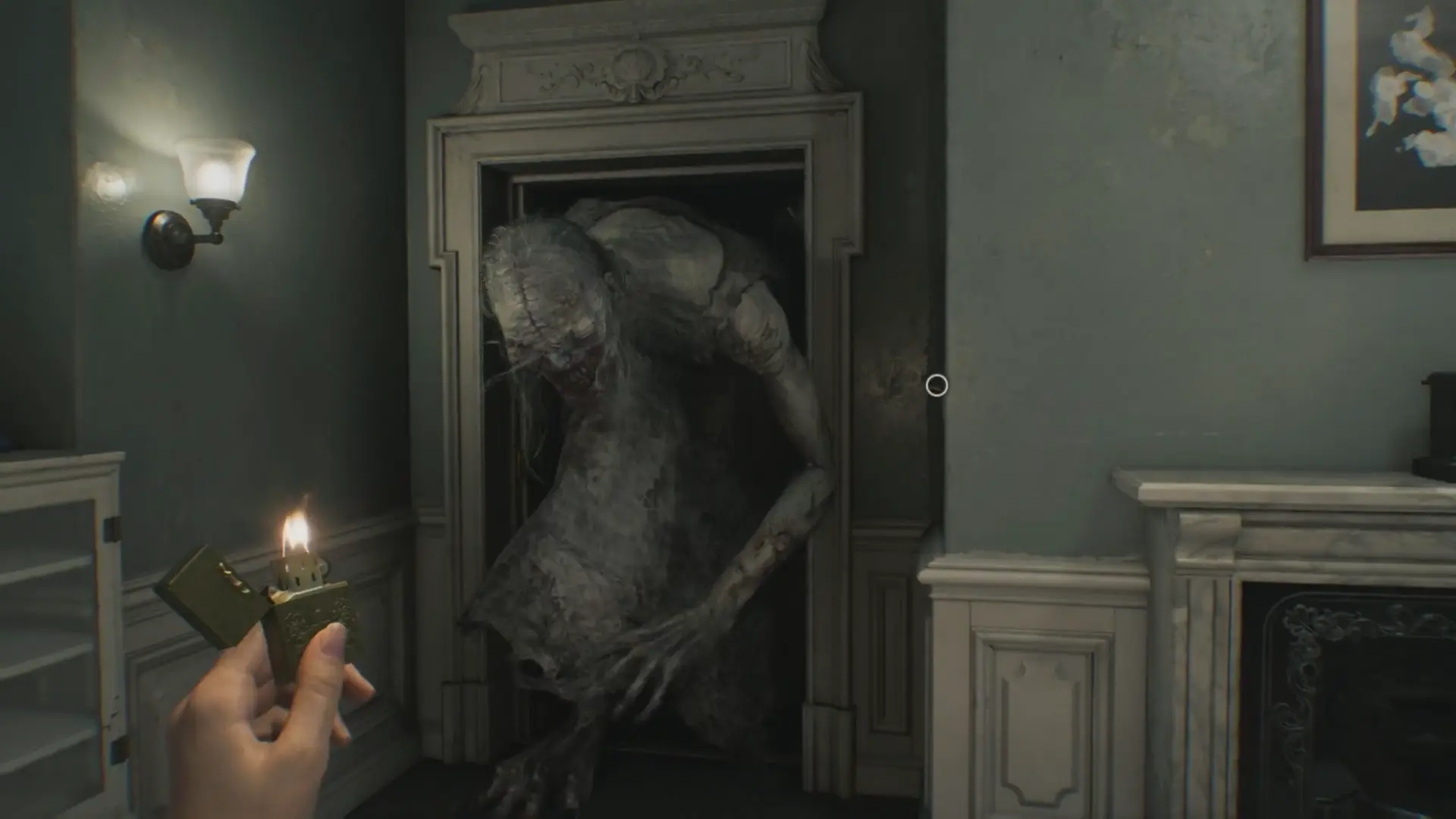
That being said, I liked this game quite a lot. There is a give and take with Resident Evil Reqium having constant friction but while also feeling frictionless. The game feels like a TV show with the way it’s paced and a really good show at that. Each section begins with a dramatic introduction and action-packed sequences that keep you locked in from moment to moment. Resident Evil has always explored and played with horror and what it means to scare the player, and Requiem definitely brings the terror. Jump scares feel tactfully placed along with tension-building moments that are further enhanced by Grace Ashcroft’s reactions to the gruesome events around her. Her shaky and breathy responses to the shambling dead and bioweapons lurching closer every second feel real and organic. It is a much welcome change compared to the super cop antics of the earlier games and the cynical approach of Ethan Winters. Capcom finds a great balance between the fear and horror by allowing Leon Kennedy to lean fully into the attitude of “I’m too old for this” and “this ain’t my first rodeo”.
While the energy of Requiem is initially very strong and the story keeps you engaged with its pace, it unfortunately gets messy by the end. As usual, per our reviews, no spoilers, but it amounts to a lot of setup and too much confusing payoff. I am anticipating that some of this will be cleared up once additional story DLC makes its debut.
The ending of the story was not the only part of the game that missed the landing. Past Resident Evil games have been built with repeated playthroughs in mind, with new game plus options such as costumes, weapons, and even additional challenges. In Resident Evil Requiem, you’ll find all of this additional content, but I wanted to call out some of the challenges and additional objectives, like beating the game in under 4 hours or using no healing items. Both are great challenges that I have completed, but it was the promise of harder difficulties that can be unlocked, such as Insanity Mode, that let me down.
In Insanity mode, both Grace and Leon will take on additional damage and have to fight harder as enemies have a longer time to kill. In addition to combat difficulty, the Insanity Mode description mentions items and enemies being moved around. However, when actually playing through the harder difficulty, the puzzles basically remained the same, with some items appearing in new locations, but when I say a new location, I mean in a room or two over. It felt like a missed opportunity to not just challenge the player on combat, but map knowledge, and could have made the Insanity Mode version of Reqieum feel like a different game. Unfortunately, this was not the case.
It is also worth noting that the difficulty of Insanity Mode can be trivialized with unlocks from the challenges such as unlimited ammo or even a rocket launcher. While these unlocks make the game more fun, it’s hard to feel like there is any kind of struggle when you can fire off as many rockets as you would like.
Final Thoughts
Even though Resident Evil Requiem has some aspects that I think could have been improved upon, it would be an understatement to say that I did not love this game. Due to the challenge requirements, I ended up beating it 3 times, that’s kind of hard to do with a game you hate. I can generally say that every aspect of Resident Evil is dialed up to 11 in this game, making it one of the best interpretations of what it means to be a Resident Evil game.
Resident Evil Requiem was released on February 27th for PlayStation 5, Xbox Series X|S, Nintendo Switch 2, and PC via Steam and the Epic Games Store.
Our Score 9/10